Anna Krüger · 2 September 2026
The Coral Reef Research Hub has made a surprising announcement regarding marine biodiversity. A team of scientists has identified a new coral species in the waters off the Polish coast in the Baltic Sea. This discovery is significant because corals are typically associated with tropical environments, yet this species appears to have adapted to the colder conditions of northern Europe.
Named provisionally as Polish Coldwater Coral, the species was found during an extensive survey conducted last year. Researchers noted its distinctive structure and coloration that set it apart from known varieties.
Exploration and Analysis
The expedition involved deploying remotely operated vehicles equipped with high-definition cameras and sampling tools. Genetic testing performed at the hub's laboratories confirmed that the coral represents a new species within the scleractinian family. Its ability to survive in temperatures as low as 8 degrees Celsius is particularly noteworthy.
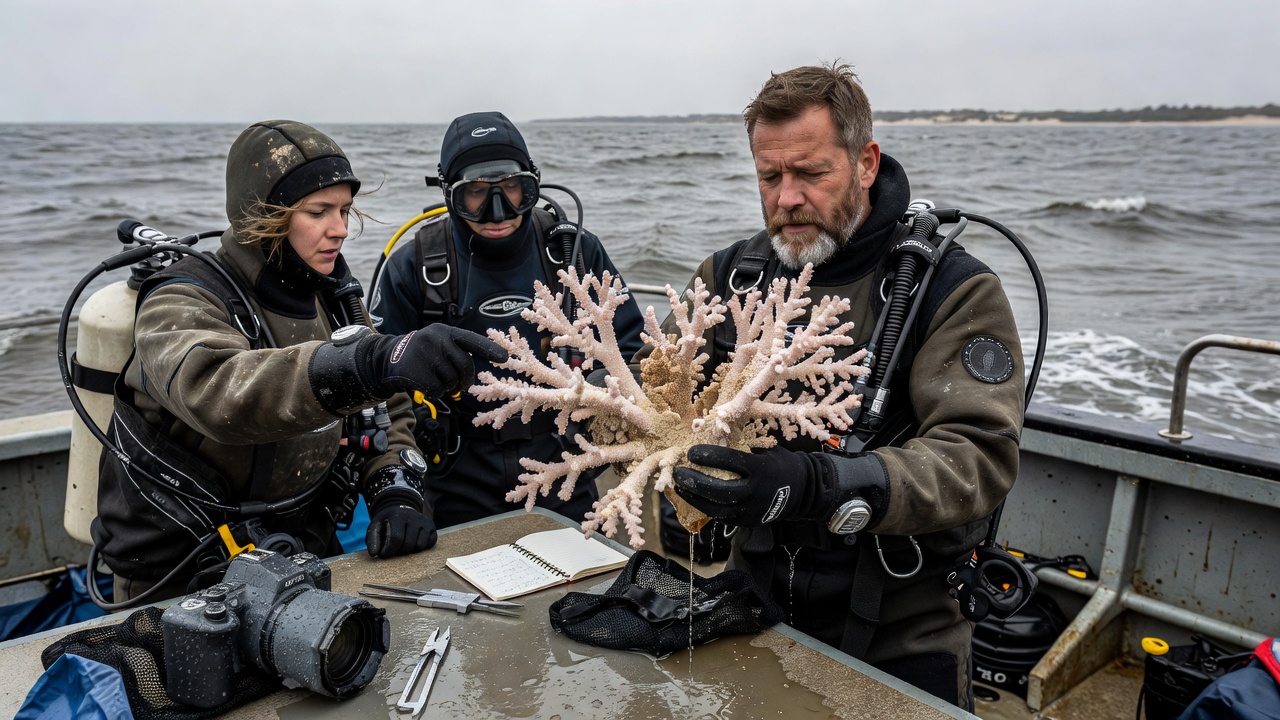
Team members collected multiple specimens for further study, including examinations of its reproductive cycles and growth patterns. The coral seems to form symbiotic associations with local microorganisms, enabling it to thrive where other corals would perish.
Historical records show no previous mentions of similar corals in the area, suggesting either a recent arrival or a long-overlooked presence. The research has involved cross-referencing with global coral databases to ensure its uniqueness.
Broader Impacts on Marine Science
This finding could reshape our understanding of coral distribution and adaptation mechanisms. It raises questions about how marine ecosystems might evolve with ongoing environmental changes, such as rising sea temperatures allowing species to expand their ranges.
The Coral Reef Research Hub intends to establish a monitoring program to track the health and expansion of this new coral population. Collaborations with Polish universities and European marine institutes are already underway to facilitate comprehensive studies.
Conservation efforts may need adjustment to protect this vulnerable new species from potential threats like pollution and fishing activities. The discovery emphasizes the value of persistent exploration in understudied regions.
Future publications will detail the taxonomic classification and ecological role of the species. This work contributes to global efforts in preserving marine biodiversity and understanding climate resilience in ocean habitats.